The nicotine pouch market in the UAE is growing. Not slowly, not quietly – it’s one of the fastest-expanding consumer categories in the region. More adults are switching away from cigarettes and vapes. Smoke-free, tobacco-free alternatives are becoming mainstream. And where consumer demand grows quickly, there’s business opportunity.
If you’ve been watching this market and wondering whether there’s a way to get involved without building a manufacturing facility, hiring product scientists, or spending years on product development – the answer is yes. It’s called white labeling, and it’s how most successful niche consumer brands get started.
HNPillow offers a white labeling service specifically for the UAE and Gulf market. This guide explains what that means, how the process works, what you need to get started, and what to expect in terms of investment and timeline.
What Is White Labeling? (And How Is It Different from Private Labeling?)
These two terms are often used interchangeably, but there’s a useful distinction:
White labeling means taking an existing, already-developed product and putting your brand name and packaging on it. The product formula, ingredients, and manufacturing process are handled by the white label provider. You focus on your brand identity, marketing, and distribution.
Private labeling typically involves more customisation at the product level – adjusting formulations, developing unique flavours, or specifying ingredients. It requires more involvement in product development but allows for a more differentiated end product.
For most first-time brand founders in the UAE, white labeling is the right starting point. It reduces complexity, cost, and time-to-market significantly. You can launch a real product, test the market, build a customer base, and then invest in more bespoke development once you understand your audience.
Why the UAE Is an Excellent Market to Launch a Nicotine Pouch Brand
Not all markets are created equal. The UAE has specific characteristics that make it genuinely attractive for a new nicotine pouch brand:
A Rapidly Growing Consumer Base
Nicotine pouch adoption in the UAE has accelerated significantly over the last two years. The combination of strict anti-smoking regulations in public spaces, a growing health-conscious population, and a consumer base that readily adopts new formats has driven strong uptake across Dubai, Abu Dhabi, and Sharjah. The buyers are already there – and the market is still far from saturated.
A Regulatory Environment That Has Opened Up
The UAE has established clearer regulatory pathways for nicotine-containing products sold through licensed retailers. Understanding that framework before launching is essential, but the fact that it exists and is being actively enforced is actually a positive signal – it means the product category is being treated as legitimate rather than operating in a grey area. Our guide on nicotine pouch legality in the UAE gives a full overview of the current regulatory picture that any brand founder should understand before entering this market.
A High-Spending, Quality-Conscious Consumer
UAE consumers – particularly in Dubai – have above-average disposable income and a demonstrated willingness to pay a premium for quality. This means that a well-positioned, well-packaged nicotine pouch brand has genuine pricing power. You’re not entering a race to the bottom on price. You’re entering a market where brand identity, product quality, and customer experience drive purchasing decisions.
Strategic Geographic Position
A brand established in Dubai has natural gateway access to the wider GCC market – Saudi Arabia, Qatar, Kuwait, Bahrain, and Oman. If your ambitions extend beyond the UAE, starting here positions you well for regional expansion.
How HNPillow’s White Labeling Service Works
HNPillow has structured its white labeling offering specifically for the UAE market context. Here’s how the process typically unfolds:
Step 1: Initial Consultation
The first conversation is about understanding what you want to build. What market are you targeting? What’s your price point? Do you have an existing business that this would complement, or is this a standalone brand? What flavour profiles and strength levels make sense for your target audience?
This conversation determines which products from HNPillow’s range fit your brand vision and whether any customisation is needed.
Step 2: Product Selection
You select the products you want to carry under your brand. This includes choosing nicotine strengths, flavour profiles, and pouch formats. You can draw from HNPillow’s existing portfolio – the same product quality and manufacturing standards that underpin the NOX, RADLER, and WYLD consumer brands – but packaged under your identity.
If you’re new to understanding what different strengths and formats mean for different consumer segments, our comparison of the NOX, RADLER, and WYLD brands illustrates how different product positions serve different audiences – useful context when building your own range.
Step 3: Brand Identity and Packaging
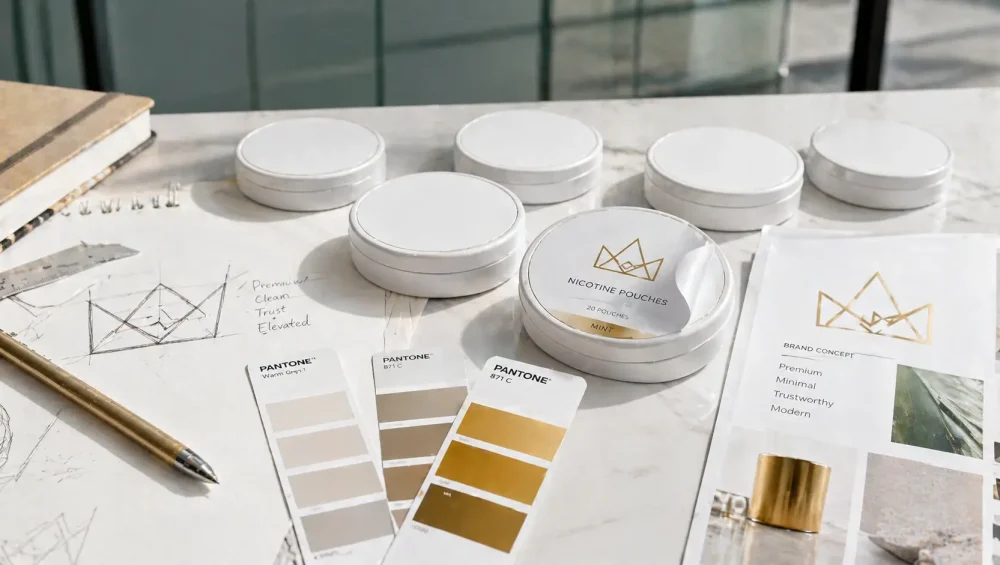
Your brand name, logo, colours, and packaging design are applied to the product. This is where your brand becomes real – a tin on a shelf, a product someone picks up, something that represents your identity in the market. Good packaging design at this stage is an investment, not a cost. It directly affects perceived quality and purchase decisions.
Step 4: Regulatory and Compliance Review
Before any product goes to market in the UAE, it needs to meet the relevant compliance requirements. HNPillow supports white label partners through this process, ensuring that your product meets UAE standards for nicotine-containing goods and that your labeling meets the requirements of the relevant authorities.
This step is non-negotiable and non-optional. Any brand entering the UAE market without proper compliance puts itself at significant legal and commercial risk. Getting this right from the start protects your investment.
Step 5: Minimum Order and Production
White labeling involves minimum order quantities – the volume threshold at which it becomes practical and economical to produce your branded product. These vary depending on the product and customisation level involved.
The minimum order for most white labeling arrangements is a commercial quantity – enough to constitute a genuine market test rather than a sample. This is a feature, not a bug: it means you’re entering the market with real stock rather than a token gesture.
Step 6: Launch and Ongoing Supply
Once your product is produced and compliance is confirmed, you’re ready to sell. HNPillow continues to supply your branded product as you scale, with consistent quality across every order.
What Type of Business Is White Labeling Right For?
White labeling isn’t for everyone. Here’s a clear-eyed look at who it suits well and who should think carefully before proceeding.
Well-Suited For:
- Vape shop and tobacco retail owners who want to create a house brand and capture more margin on products they’re already selling as third-party stock
- E-commerce entrepreneurs in the UAE who understand digital marketing and have the infrastructure to sell direct-to-consumer online
- Corporate gifting and hospitality businesses looking for branded product experiences for events, lounges, or premium gift packages
- Distributors who already supply to UAE retail outlets and want a proprietary product to complement their portfolio
- Entrepreneurs who have identified a specific niche – a particular flavour profile, demographic, or aesthetic – that isn’t currently being served by existing UAE brands
Requires More Consideration If:
- You have no existing sales channel or customer base in the UAE – building distribution from scratch while simultaneously managing a new brand is a significant undertaking
- Your budget doesn’t extend to the minimum order quantities required – white labeling requires real commercial commitment, not a casual experiment
- You haven’t yet done basic market research on who your customer is and what they want
Key Questions to Answer Before You Approach a White Label Partner
Going into a white label conversation prepared makes the process significantly faster and more productive. Here are the questions worth having answers to before you pick up the phone:
- Who is your target customer? – Age range, lifestyle, where they currently buy pouches, what they currently pay.
- What is your sales channel? – Online direct-to-consumer, wholesale to retailers, a physical shop, or a combination.
- What is your brand positioning? – Premium, mid-market, or value? Lifestyle-focused or functional? What’s the brand story?
- What flavours and strengths make sense for your audience? – This is where understanding what different strength levels mean for different user types becomes practically important.
- What is your budget? – Not just for stock, but for packaging design, compliance costs, and initial marketing.
- What is your timeline? – How quickly are you aiming to launch, and what milestones do you need to hit along the way?
What Does White Labeling Actually Cost?
Specific pricing depends on volume, customisation, and product selection – all of which are discussed directly with HNPillow’s white labeling team. What’s worth understanding conceptually is how the economics work.
The cost structure for white labeling involves three main components:
- Product cost per unit – The cost of the actual pouches you’re ordering, which decreases with volume (economies of scale apply)
- Packaging and design – Tin design, labeling, branding – a one-time cost that gets amortised across your entire run
- Compliance and registration – The cost of ensuring your product meets UAE regulatory requirements, which is a one-time cost per product
The commercial reality is that white labeling only makes financial sense above certain volumes. The margin opportunity comes from selling your branded product at a retail price that reflects the value of your brand rather than paying a third party’s margin. Getting to a viable margin requires sufficient volume to amortise fixed costs – which is why minimum order quantities exist.
Getting Started With HNPillow’s White Labeling Programme
If you’ve read this far and this opportunity aligns with where you are as a business, the next step is a direct conversation. HNPillow’s white labeling enquiries are handled through the white labeling page on the HNPillow website, where you can outline your requirements and start the dialogue.
Bring your questions, your brand thinking, and a realistic picture of your commercial situation. The more specific you are about what you want to build, the more useful the initial consultation will be.
The Bigger Picture: Why Now Is the Right Time
Markets have windows. The nicotine pouch market in the UAE is currently in an early growth phase – adoption is rising, but brand density is still relatively low. The brands that establish themselves clearly in the next 12–24 months will have a significant first-mover advantage as the category matures.
Waiting until the market is fully established means entering against well-funded, well-known competitors with existing customer loyalty. Entering now means helping define what the category looks like in the UAE – and building a customer base while acquisition is still relatively straightforward.
White labeling through an established UAE operator like HNPillow removes the most significant barriers – manufacturing, compliance, and product development – and lets you focus on what actually builds a brand: knowing your customer, building your channel, and showing up consistently.
The market opportunity is real. The infrastructure to access it is available. The question is whether you’re ready to move.